We appreciate and value the commitment of investment partners toward improving water and sanitation access through investments in infrastructure such as toilets, rainwater harvesting systems, piped water schemes, and school WASH facilities. Such infrastructure is essential and often forms the foundation for improved public health and dignity.
However, evidence from India and across the world consistently shows that infrastructure alone does not guarantee long-term outcomes. Water and sanitation challenges are not merely engineering problems; they are fundamentally human behavior, governance, and sustainability challenges.
The question is not only whether a toilet is constructed, a piped water system is installed, or a rainwater harvesting structure is built. The real question is whether these assets continue to function effectively and serve communities after project completion.
The Sustainability Challenge
The Government of India has facilitated the construction of nearly 12 crore household toilets through successive sanitation programmes, from the Central Rural Sanitation Programme (CRSP) to the Swachh Bharat Mission (SBM). Yet India’s sanitation journey offers an important lesson: infrastructure alone does not solve sanitation challenges. Despite decades of investments in toilet construction, open defecation remained widespread across many parts of the country.
A similar lesson is emerging from the rural piped water schemes. Under the Jal Jeevan Mission (JJM) and various state PHED-led programmes, thousands of piped water supply schemes have been established to provide household tap connections. While these investments have significantly expanded access to water infrastructure, many schemes continue to face challenges related to community ownership, tariff collection, operation and maintenance (O&M), source sustainability, and local accountability.
Recognizing these challenges, both the Government and leading WASH organization are increasingly emphasizing the role of Village Water and Sanitation Committees (VWSCs)/Pani Samitis, community-led management structures, user fee collection mechanisms, and local capacity building to ensure the long-term sustainability of water supply services. The policy direction is clear: sustainable water services require not only engineering solutions but also strong community institutions and local stewardship.
These experiences from both sanitation and water sectors underscore a critical reality: infrastructure alone does not guarantee impact. A toilet creates value only when it is consistently used and maintained. A piped water scheme creates value only when it continues to deliver safe and reliable water year after year. Sustainable outcomes are achieved when infrastructure investments are complemented by behaviour change, community engagement, institutional strengthening, and local ownership.
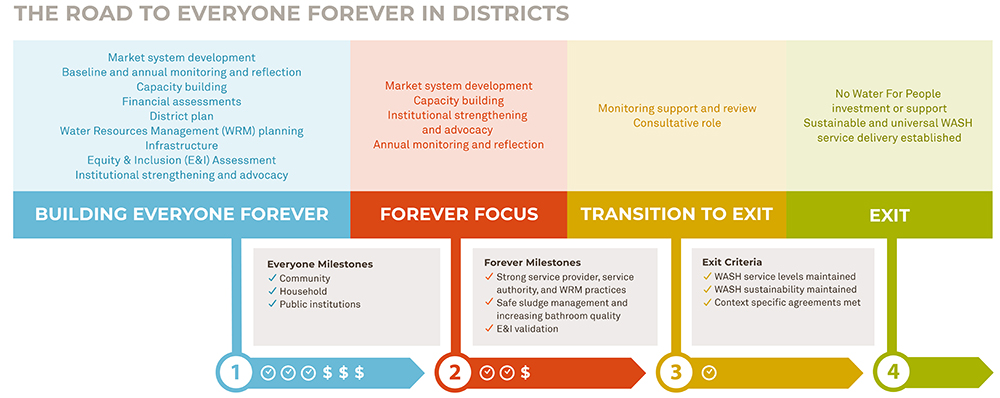
The lesson from India’s WASH journey is clear: infrastructure creates access, but community ownership ensures sustainability. If the goal is merely to construct assets, success can be measured by the number of toilets built or pipelines laid. However, if the goal is to solve water and sanitation challenges for the long term, investments must go beyond construction and focus equally on the people, institutions, and systems that sustain those services long after the project has ended.
What is our ultimate objective?
Is it to build infrastructure, or is it to solve the sanitation and water problem permanently?
Our goal is not to count toilets and structure built, but to ensure water and sanitation services are used, maintained, and sustained for generations.
If the objective is simply to build toilets, then success can be measured by the number of toilets constructed.
However, if the objective is to solve sanitation problems, then success must be measured differently; are people consistently using the toilets, schools maintaining clean and functional facilities, does water schemes still functioning? Infrastructure creates access, People create sustainability.
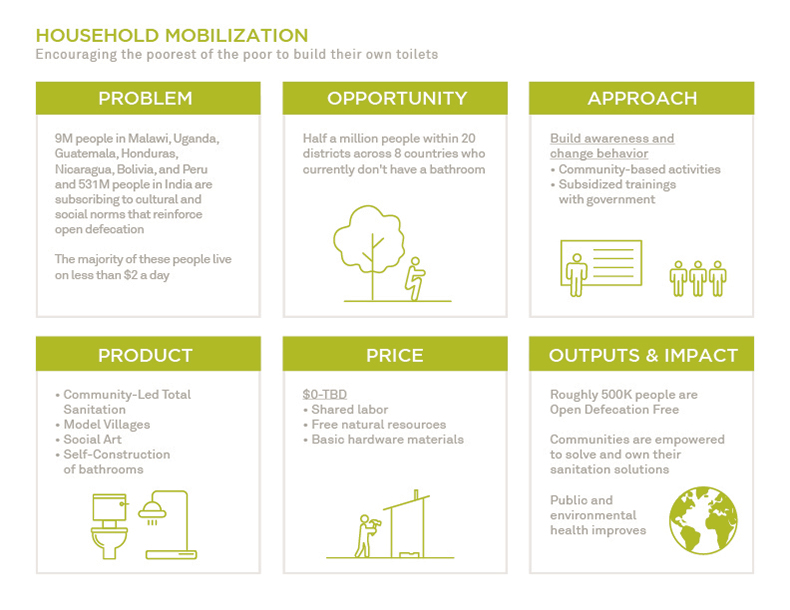
Our experience, and decades of evidence from India’s sanitation journey, show that infrastructure without community ownership often leads to underutilization, poor maintenance, and declining impact. On the other hand, when infrastructure is combined with behavior change, community participation, local leadership, and operation and maintenance systems, the investment continues to deliver benefits long after project completion.
Therefore, we are not proposing an alternative to infrastructure. We are proposing a way to protect and maximize the value of infrastructure investments.
We believe every rupee invested in construction should be supported by investments in community ownership and behavior change, because the true measure of success is not what is built today, but what continues to work tomorrow.”
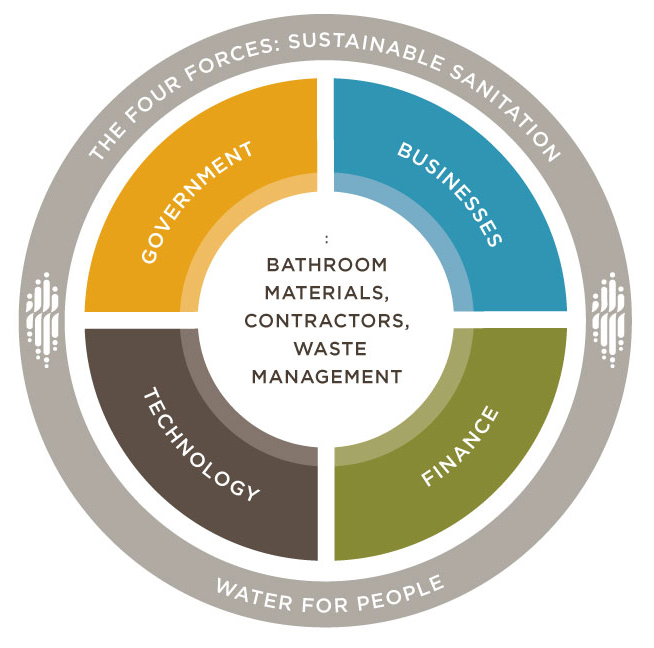
Therefore, the most effective investments are those that combine infrastructure development with community ownership, behavior change, and local capacity strengthening.
“We don’t want communities to have toilets; we want communities to use toilets. We don’t want villages to receive water systems; we want villages to enjoy reliable water services for generations.”
Safdar Ali
C4D Specialist
Water For People