Leveraging Voice-based Platforms for Operation and Maintenance under Har Ghar Nal Ka Jal
Vivek Sharan¹, Safdar Ali²
¹Water For People, Patna, Bihar, India
²Water For People, Patna, Bihar, India
Corresponding Author Email ID: vsharan@waterforpeople.org
Abstract
Ensuring the sustainable operation and maintenance (O&M) of rural piped water schemes (PWS) remains a critical challenge under the Har Ghar Nal Ka Jal programme in Bihar. While infrastructure coverage has expanded rapidly, weak community ownership, limited role clarity among frontline functionaries, absence of accessible grievance redressal systems, and low tariff compliance continue to undermine service reliability.
Dastak Abhiyan is a pilot initiative implemented by Water For People in collaboration with the Public Health Engineering Department, Government of Bihar, and Gram Vaani to address these systemic gaps through a campaign-based, digitally enabled community engagement model. Implemented in Sandesh block of Bhojpur district, the initiative combines doorstep mobilisation, strengthening of Ward Implementation and Management Committees (WIMCs), and sustained social and behaviour change communication (SBCC) using the Mobile Vaani voice platform. Over seven months, the campaign reached 1,819 households through 40 door-to-door field campaigns and engaged more than 2,000 households through regular voice-based interactions, quizzes, and thematic broadcasts. A total of 154 WIMCs were trained on governance, O&M, and grievance handling.
A key outcome of the campaign was the establishment of a community-accessible grievance redressal system where none existed earlier. Through Mobile Vaani, 165 water service–related grievances were formally registered by community members and escalated to the Public Health Engineering Department, improving issue visibility and accountability. Additional behavioural and institutional shifts included increased community awareness on water conservation and water quality, community-led testing of 51 water samples, revitalisation of WIMCs as active governance forums, and enhanced peer learning through Jal Chaupals and recognition of 94 community champions.
The pilot demonstrates that integrating participatory outreach with low-tech, literacy-neutral digital platforms can shift norms from passive service receipt to shared accountability, strengthen local water governance, and improve feedback and grievance mechanisms. The Dastak Abhiyan approach offers a scalable and policy-relevant model for strengthening O&M sustainability under the Jal Jeevan Mission in resource-constrained rural settings.
Keywords: Behaviour Change Communication; Community Ownership; Digital Governance; Jal Jeevan Mission; Rural Piped Water Schemes
Introduction
India’s Jal Jeevan Mission (JJM) has achieved unprecedented expansion of rural piped water supply infrastructure, aiming to provide Functional Household Tap Connections (FHTCs) to all rural households. However, the sustainability of these systems—particularly their operation and maintenance—poses a major policy and implementation challenge. In Bihar, frequent system downtime, inadequate tariff collection, and limited technical and managerial capacity at the local level threaten the long-term functionality of PWS established under the Har Ghar Nal Ka Jal programme.
Ward Implementation and Management Committees (WIMCs), pump operators (Anurakshaks), and Panchayati Raj Institutions (PRIs) are central to local O&M arrangements, yet often lack clear role definitions, regular capacity building, and mechanisms for meaningful community engagement. Households, in turn, tend to perceive piped water as a government-owned asset, resulting in low ownership, weak accountability, and resistance to user charges. Dastak Abhiyan responds to this governance and behaviour gap by positioning communities not merely as beneficiaries, but as active co-managers of rural water services.
Literature Review
Existing literature on rural water supply in India highlights that technical infrastructure alone is insufficient to ensure service sustainability. Studies emphasise the importance of community participation, cost recovery mechanisms, and continuous engagement for effective O&M. Behavioural factors—such as willingness to pay, perceptions of water quality, and trust in local institutions—are increasingly recognised as determinants of service outcomes. Digital tools, including mobile-based platforms, have shown promise in improving information dissemination, grievance redressal, and monitoring, particularly in low-literacy and remote contexts.
However, much of the existing evidence focuses on either institutional reforms or technological solutions in isolation. Limited documentation exists on integrated models that combine doorstep engagement, local capacity building, and voice-based digital communication tailored to rural users. Dastak Abhiyan contributes to this gap by demonstrating how a hybrid, campaign-style approach can operationalise community ownership and improve O&M outcomes within the JJM framework.
Methodology / Approach
Dastak Abhiyan was implemented as a pilot in Sandesh block of Bhojpur district, Bihar. The approach combined participatory field outreach with a voice-enabled digital platform to ensure inclusive and sustained engagement. Key components included:
- Stakeholder Mapping and Onboarding: Identification and mobilisation of Dastak Dal members, WIMCs, pump operators, PRI representatives, SHGs, community influencers, and households.
- Capacity Building: trainings for frontline as Dastak Dal members, focusing on roles and responsibilities, basic O&M principles, tariff collection and Dastak campaign.
- Doorstep Counselling: Household visits by Dastak Dal members on Dastak Day, to discuss safe water use, conservation practices, tariff payment, and grievance reporting.
- Digital Messaging: Use of Mobile Vaani, a voice-based IVR platform, to deliver periodic messages, reminders, and surveys, and to enable two-way communication.
- Data Systems: Creation of user databases through ward records, household interactions, and missed-call registrations, shared with government stakeholders for planning and monitoring.
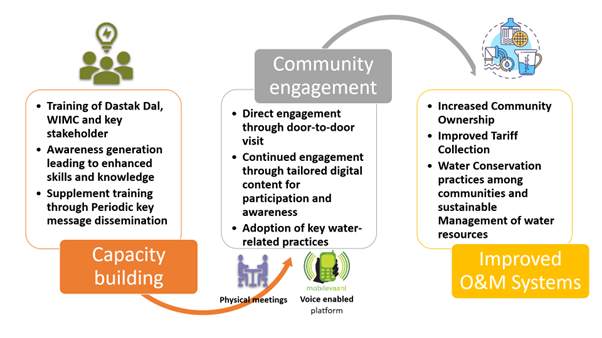 Fig. 1: Integrated Dastak Abhiyan model linking community outreach, local institutions, and voice-based digital engagement.
Results / Key Findings
The pilot generated measurable improvements across reach, engagement, grievance redressal, and community ownership:
- Reach and Exposure: A total of 1,819 households were reached through 40 door-to-door field campaigns conducted by Dastak Dal members. In parallel, more than 2,000 households were regularly engaged through the Mobile Vaani platform via 110 quizzes, thematic audio broadcasts, and refresher messages, ensuring inclusive participation irrespective of literacy levels.
- Institutional Capacity Strengthening: 154 WIMCs received structured training on governance roles, O&M processes, and grievance handling, supported by audio refresher capsules and IVR-based assessments. This contributed to improved record-keeping, local decision-making, and coordination with frontline workers.
- Grievance Redressal and Feedback: The campaign facilitated the registration of 165 water-related grievances through Mobile Vaani, which were formally escalated to the Public Health Engineering Department using defined escalation protocols. This improved visibility of service issues and strengthened feedback loops between communities and service providers.
- Community Participation and Behavioural Outcomes: Forty WIMCs hosted field campaigns, and selected wards organised Jal Chaupals, which was not happening before, for open dialogue on water services. Community engagement activities—including World Water Day events, water testing kiosks (51 samples tested and shared), and recognition of 94 community champions and WIMCs—enhanced trust, peer learning, and collective responsibility. Early behavioural shifts were observed in increased awareness of water conservation, improved willingness to report issues, and stronger community involvement in PWS management.
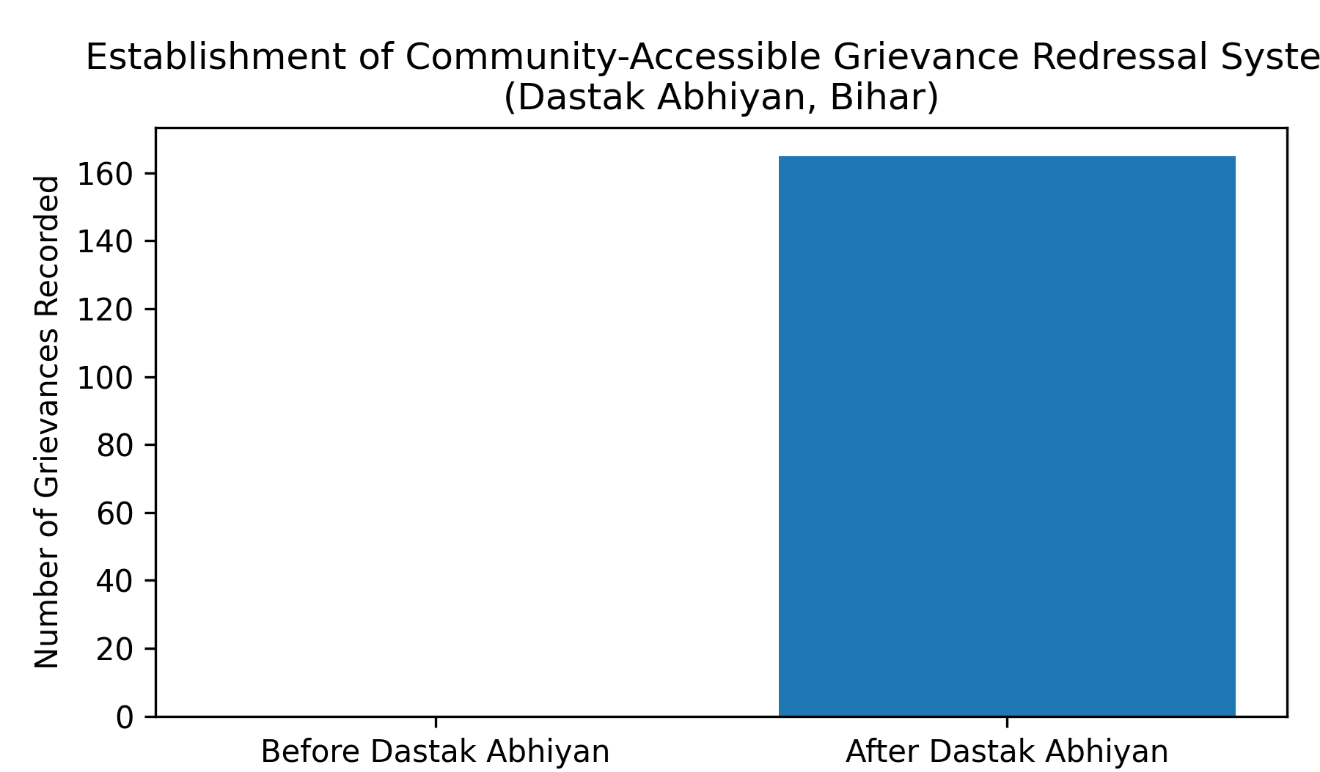 Fig. 2: Use of Mobile Vaani for community engagement, grievance reporting, and behaviour reinforcement in rural PWS seen very effective.
Discussion & Policy Implications
The Dastak Abhiyan experience underscores the importance of embedding SBCC and digital engagement within JJM’s O&M strategies. Voice-based platforms are particularly effective in low-literacy rural contexts, enabling inclusion of women, elderly users, and marginalised groups. The campaign approach aligns with JJM and SBM(G) guidelines emphasising community participation and cost recovery, while also contributing to climate resilience by promoting water conservation.
From a governance perspective, the initiative demonstrates how frontline workers and local institutions can be repositioned as communicators and facilitators, not merely operators. The relatively low cost and modular design of the approach enhance its replicability across districts and states.
Conclusion & Recommendations
- Integrate structured SBCC and digital voice platforms into routine O&M support under Jal Jeevan Mission.
- Invest in continuous capacity building of WIMCs, pump operators, and community volunteers with clear role definitions.
- Promote doorstep engagement and peer learning to build household-level ownership of water services.
- Scale hybrid outreach–digital models like Dastak Abhiyan to strengthen sustainability of rural PWS in similar contexts.
Acknowledgement
The authors acknowledge the support of the Public Health Engineering Department, Government of Bihar, and Gram Vaani, as well as the active participation of community members and frontline functionaries in Sandesh block.
References
Government of India, Jal Jeevan Mission: Operational Guidelines, Ministry of Jal Shakti, New Delhi, 2019.
World Bank, Sustaining Rural Water Supply: Lessons from Practice, World Bank, Washington DC, 2017.
Smits, S. et al., Community-based management of rural water supply, IRC, The Hague, 2015.