As we close the final quarter of 2025 and prepare to welcome a new year, this edition of Pravah captures a period of intense engagement, reflection, and consolidation for Water For People India. The last three months have seen meaningful progress across geographies in terms of strengthening water service delivery systems, deepening institutional convergence, and advancing climate-resilient approaches to water, sanitation, and hygiene.
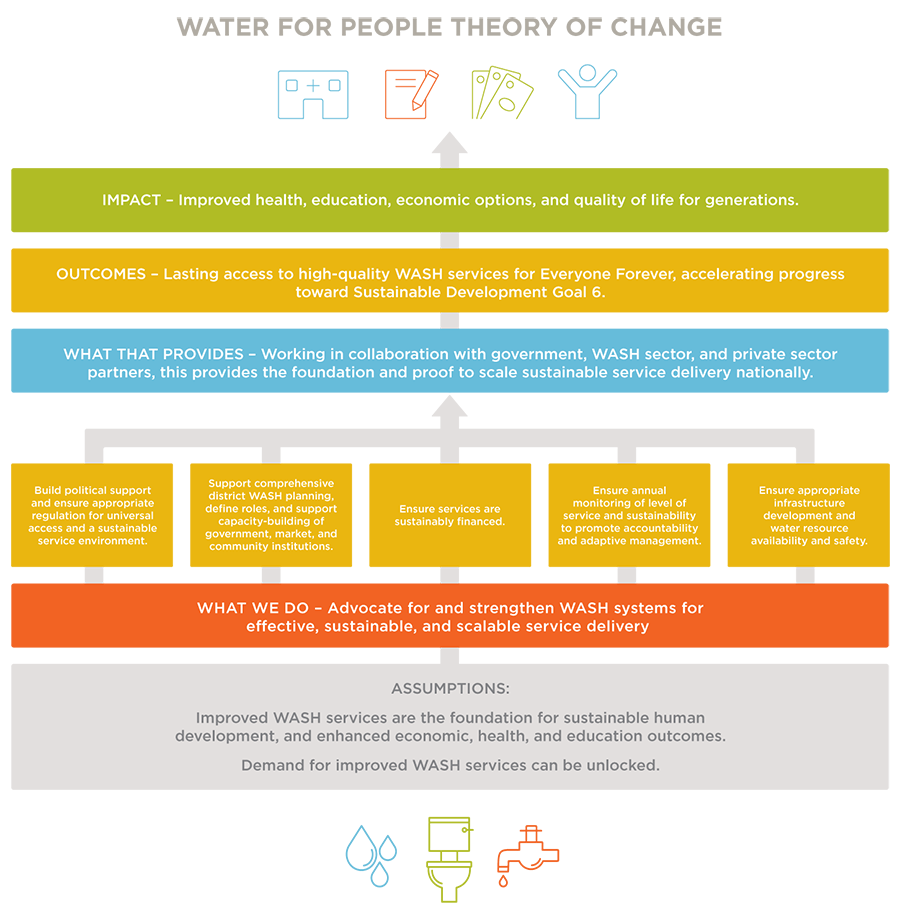
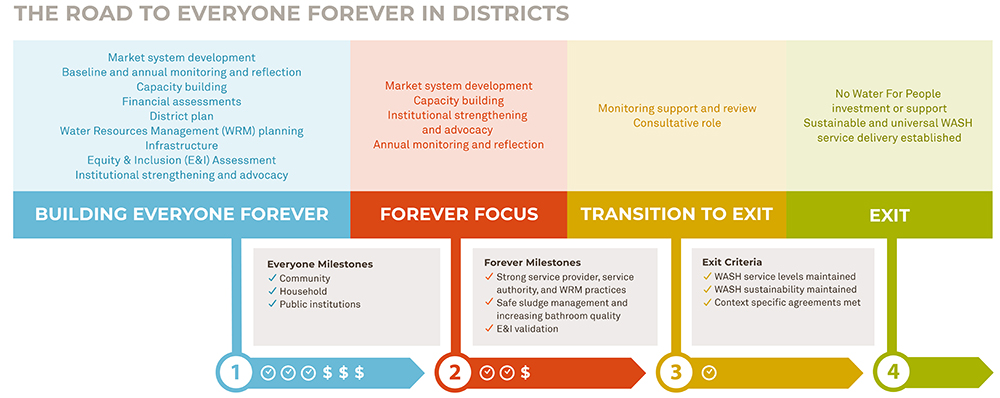
This quarter’s work reflects a clear shift from infrastructure creation to service sustainability. Our teams and partners focused on strengthening governance, financial sustainability, and operations and maintenance whether through Technical Support Units, WASH–SHG convergence, digital public infrastructure, or community-led water resource management. The expansion of capacity-building efforts, use of learning platforms like iECHO, and engagement with state and district institutions underscore our commitment to building systems that last beyond project cycles.
At the same time, our work is evolving to more deliberately integrate nature-based and climate-resilient solutions into WASH programming. Initiatives in Maharashtra and West Bengal, ranging from water source sustainability and groundwater recharge to community-led water resource management, underscore this direction. Alongside this, innovation in urban sanitation, such as the Sankoya partnership in Mumbai, reflects our continued commitment to testing.
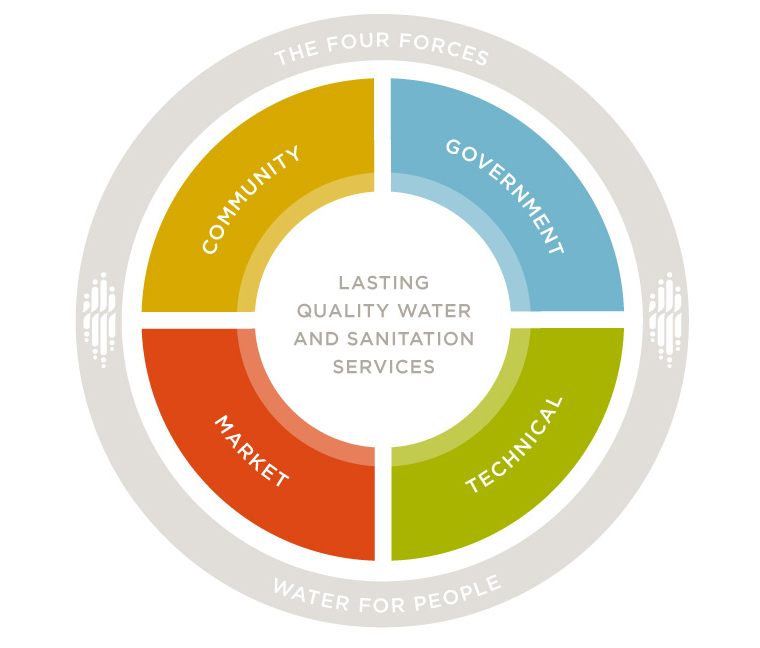
This period has also reaffirmed the importance of collaboration across government departments, civil society, academia, private sector partners, and, most importantly, communities themselves. From climate-resilient water security initiatives to shared sanitation models and groundwater stewardship, the work highlighted in this newsletter reflects the collective strength of partnerships grounded in trust, learning, and accountability.
This quarter also marks a personal transition for me, as I conclude my role as Program Director at the end of December 2025. It has been a privilege to be part of an organization that consistently places people, systems, and equity at the center of its work. I leave with deep gratitude for my colleagues, partners, and community leaders who have shaped this journey and with strong confidence in the team that will carry this work forward.
As Water For People India steps into 2026, I am certain that the organization will continue to grow in relevance, impact, and integrity. I wish the entire team and our partners a wonderful new year filled with purpose, collaboration, and continued commitment to ensuring safe water and sanitation for all.
Warm regards,
– Wakeel Ahmed Siddiqui, Program Director
Updates from Assam
Expanding School and Community WASH Interventions in Kamrup
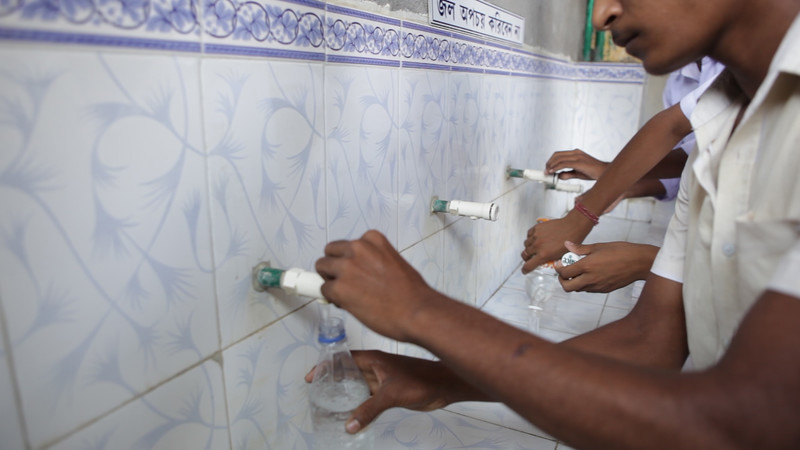
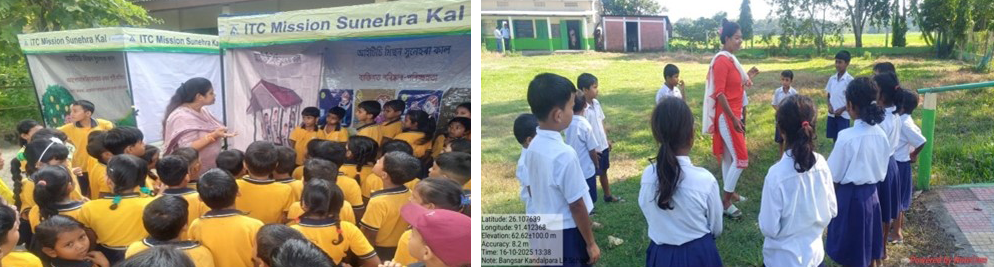
Under the ITC Mission Sunehra Kal project, over the last quarter, Water For People implemented integrated school- and community-based WASH interventions across Rampur and Chhaygaon Blocks of Kamrup district, reaching over 2,800 people. Activities included School Management Committees orientations, Matrigot meetings, Child Cabinet trainings, school awareness sessions, and WASH kiosks to strengthen child leadership and hygiene practices. Adolescent girls and caregivers were engaged through targeted trainings and Mothers’ Committee meetings, while GP-level orientations supported local governance. Community awareness drives under the Lighthouse Initiative advanced Open Defecation Free+ goals, alongside the launch of door-to-door waste collection for 300 households in Rampur GP.
Strengthening Jal Jeevan Mission (JJM) Governance and Financial Sustainability in Assam
Under JJM Assam, Water For People India is supporting real-time monitoring and mid-term assessments of Water User Committees (WUCs) using the mWater application to validate 5-Star Ratings and improve service delivery. The second phase of Jal Baithaks was conducted at GP, Cluster Level Federation, and WUC levels to address gaps and mobilize communities towards 100% tariff collection, strengthening the sustainability of rural piped water supply schemes. In parallel, the Assam WASH Financial Sustainability Study was completed and presented to senior JJM leadership, highlighting lifecycle costing and O&M alignment. Follow-up workshops and an ECHO India session with Young Professionals are supporting field-level adoption of improved O&M practices.
Updates From Bihar
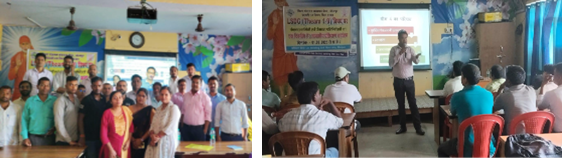
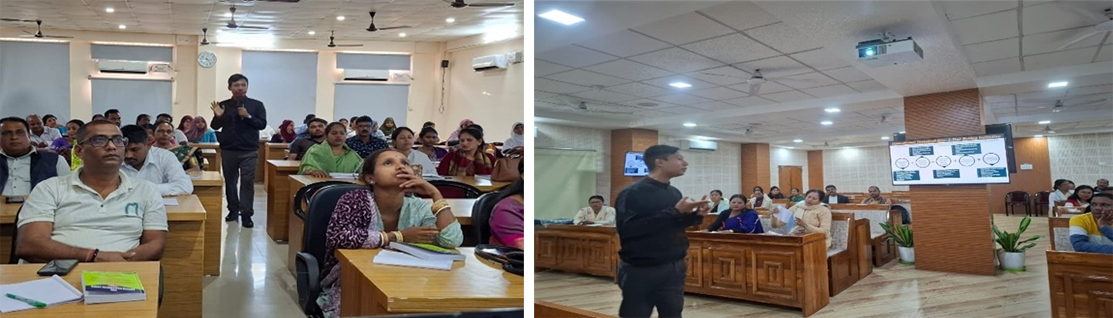
Seven-Day Local Sustainable Development Goals (LSDG) 4 & 5 Training Strengthens Panchayat Capacity in Bhojpur
A seven-day capacity-building training on LSDGs 4 and 5 was conducted in Bhojpur by the Panchayati Raj Department, with technical support from Water For People’s Technical Support Unit. The programme trained 401 participants, including PRI members, Panchayat Secretaries, and Panchayat Executives from 14 blocks. The initiative aims to strengthen collaborative planning, promote gender-responsive governance, and improve service delivery at the Panchayat level across the district.
Strengthening WASH Systems through Digital Public Infrastructure (DPI)
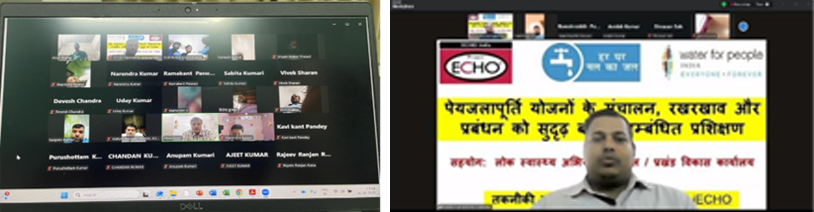
Water For People is strengthening WASH service delivery by using DPI and structured learning platforms such as iECHO. Recent virtual sessions focused on Jal Chaupals, water quality testing using Field Testing Kits and H₂S vials, tank cleaning, and O&M of Rural Piped Water Supply Schemes, reinforcing community-led monitoring under Har Ghar Swachhta and Har Ghar Sujalata. Monthly iECHO sessions in Nalanda brought together frontline workers, PRIs members, and PHED officials to address O&M challenges, grievance redressal, and preventive maintenance.
Advocacy Accelerates FTK Training and Water Quality Management Information System Registration in Muzaffarpur
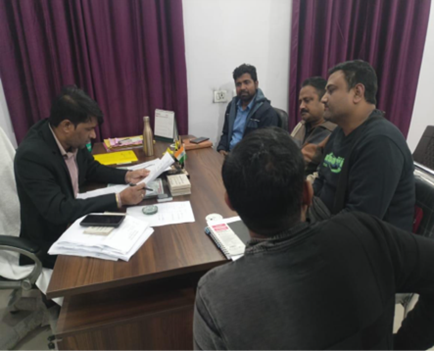
Water For People India engaged with officials from the PHED to address delays in FTK user training and registration on the portal across 12 blocks of Muzaffarpur. The delay, caused by recent elections, had stalled progress for nearly three months. Following meetings with Executive Engineers from PHED Muzaffarpur and Motipur on November 27, 2025, the department acknowledged the urgency and sought Water For People’s support in planning and conducting the pending trainings in coordination with district officials and engineers.
Lohiya Swachchha Bihar Abhiyan State Team Visits WFP-Supported FSTP in Muzaffarpur
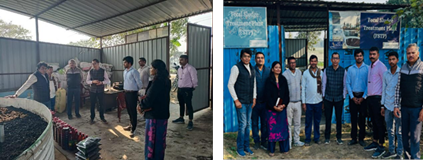
In November 2025, the LSBA state team visited the Water For People India supported Faecal Sludge Treatment Plant (FSTP) in Muzaffarpur to review its operations and maintenance systems. The State Coordinator appreciated the plant’s business model and emphasized the need for strong district-level support to ensure long-term sustainability. The team also expressed interest in Water For People India’s technical support for improving operation and maintenance (O&M) of upcoming LSBA-supported FSTPs across the state.
Updates from Maharashtra
New Water Source Sustainability Project Launched in Yavatmal
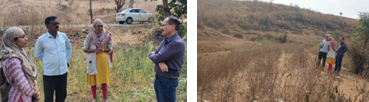
In October 2025, Water For People India Trust initiated a three-year Water Source Sustainability project in Darwha block of Yavatmal district, with support from TATA Trusts. The initiative will address persistent water scarcity, declining groundwater levels, and gaps in rural piped-water schemes that have led to seasonal dependence on water tankers. By tackling over-extraction, water-intensive cropping, weak recharge systems, and limited local stewardship, the project aims to strengthen drinking water reliability and long-term water security in the region.
Onion Cultivation Workshop Strengthens Farmer Capacities in Kendur
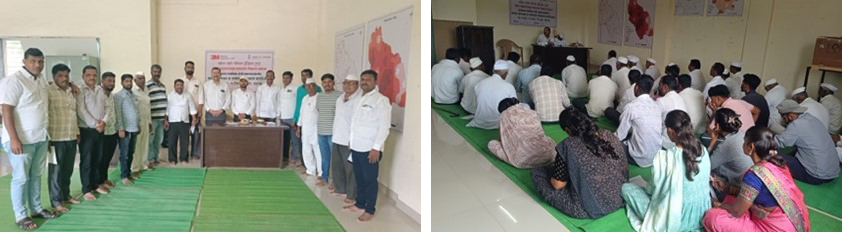
An Onion Cultivation Workshop was organized in Kendur under the Watershed Development through People Participation Project supported by 3M India Limited and implemented by Water For People India Trust. Led by Dr. Yogesh Yadav from Krishi Vigyan Kendra, Narayangaon, the session focused on nursery management, pest control, and improved cultivation practices. Farmers actively engaged in the discussions, gaining practical knowledge to enhance productivity. The workshop reinforced the project’s commitment to sustainable agriculture and farmer empowerment through knowledge sharing.
MoU Signed to Establish Technical Support Unit in Nandurbar
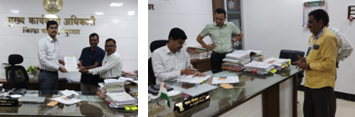
Water For People India has signed a Memorandum of Understanding (MoU) with Zilla Parishad Nandurbar to establish a Technical Support Unit (TSU) for the district. The MoU was signed by Shri Naman Goyal, IAS, Chief Executive Officer, Z.P. Nandurbar, in the presence of Shri I. B. Pawar, Deputy CEO and Director, Jal Jeevan Mission (JJM). The TSU will provide technical and programmatic support to strengthen planning, implementation, and sustainability of rural water supply and WASH initiatives in Nandurbar, supporting improved service delivery under JJM.
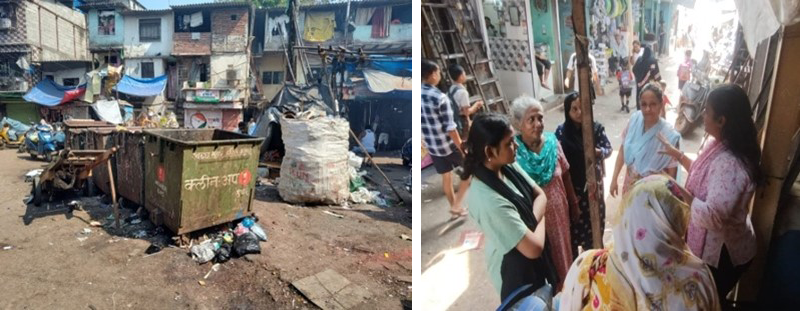
Women-Focused Sanitation Innovation Launched in Mumbai with Sankoya
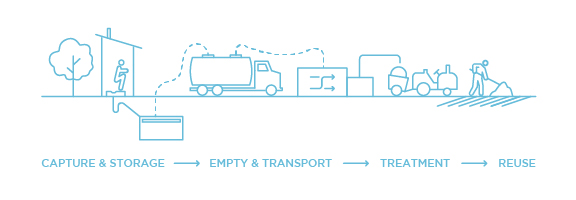
Water For People India has initiated collaboration with Sankoya Technologies to develop a women-centric community toilet integrated with a Faecal Sludge Management (FSM) unit in the Tulsiwadi slum area of Mumbai Central. The initiative aims to safely treat faecal waste by converting it into ash, promoting sustainable and hygienic sanitation practices. Site identification and baseline studies have been completed, and the project will move into construction following vendor finalization.
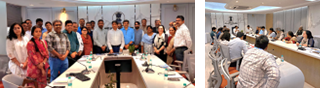
Maharashtra Water Alliance Advances Climate-Resilient Water Security
Partners of the Maharashtra Water Alliance are collectively advancing climate-resilient water safety and security across the state through strong public–private collaboration. Under the leadership of Shri Parrag Jain, Principal Secretary, Water Supply and Sanitation Department, the alliance is reaching 11,913 villages across all 34 rural districts of Maharashtra. This collective effort is strengthening sustainable water systems at scale and reinforcing long-term water security.
Updates from Odisha
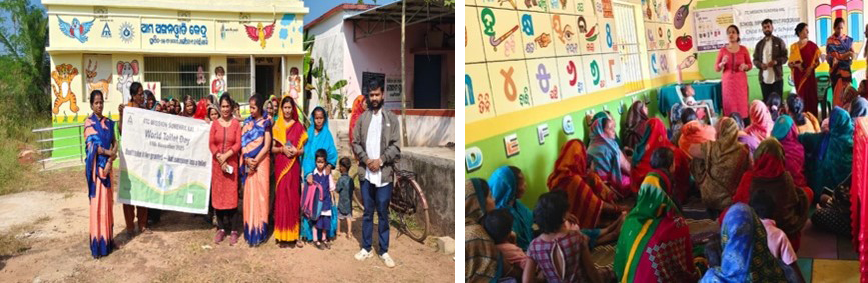
Integrated WASH Interventions Strengthen Schools and Communities in Odisha
Integrated WASH interventions were implemented under ITC Mission Sunehra Kal across 6 schools, 8 Anganwadi Centres (AWCs), and surrounding communities in Khordha district. Global Handwashing Day and World Toilet Day were observed through community and school events, reaching over 450 participants via demonstrations, folk media, and discussions. Focused sessions were held for adolescent girls on hygiene and Menstrual Hygiene Management, along with mothers’ meetings and community awareness drives on sanitation, safe water handling, nutrition, and waste segregation. School platforms such as Child Cabinet trainings, Mothers–Teachers Association meetings, and School Management Committee meetings strengthened collaboration for regular monitoring and upkeep of WASH facilities, reinforcing sustained behaviour change.
Updates from West Bengal
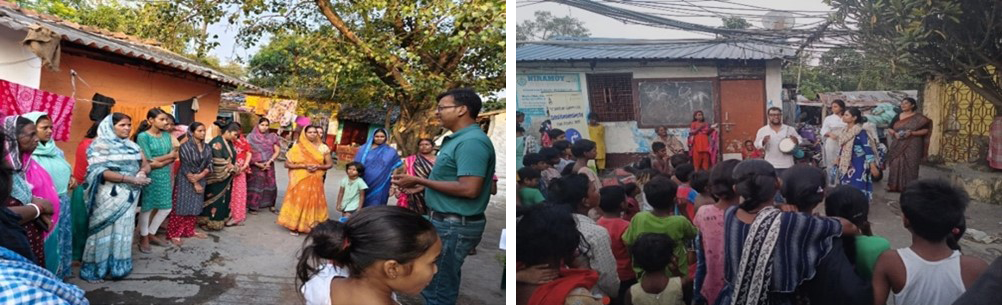
Urban WASH and Climate Action Strengthened in Kolkata
Under ITC Mission Sunehra Kal, 210 community- and school-based activities were conducted over the last quarter in the Khidderpore hotel catchment area of Kolkata, reaching 5,294 people. Community interventions focused on WASH, Menstrual Hygiene Management, and leadership, with awareness sessions on municipal and community hygiene, solid waste management, and global observances like Global Handwashing Day and World Toilet Day reaching over 2,400 residents in slum settlements. In schools, WASH awareness programmes, climate change exhibitions, and training sessions engaged nearly 2,850 students and stakeholders strengthening hygiene practices, environmental responsibility, and collaborative school governance across the urban ecosystem.
Strengthening WASH–SHG Convergence in West Bengal
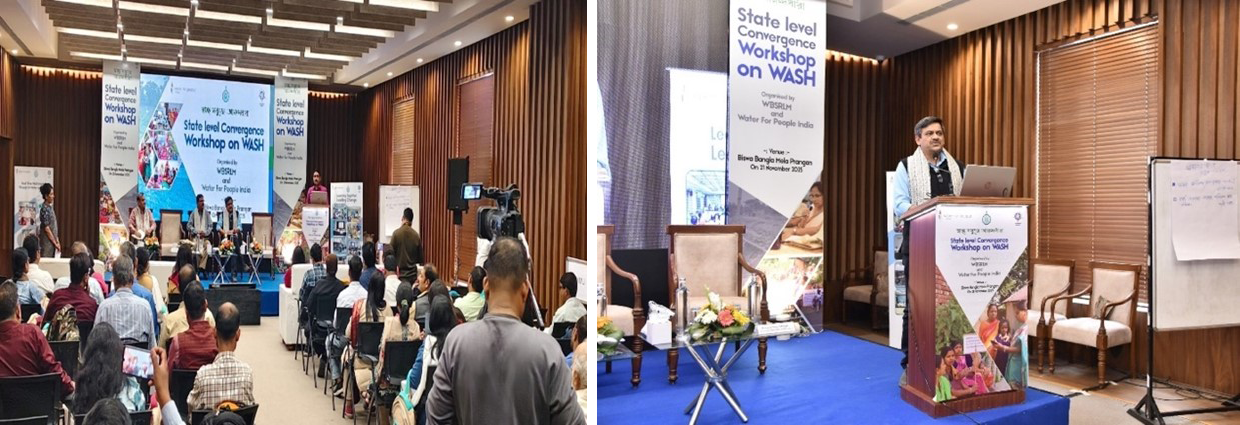
A State-Level Conference Workshop was held to strengthen convergence between WASH systems and Self-Help Groups under the West Bengal State Rural Livelihoods Mission (WBSRLM). With participation from Swachh Bharat Mission – Grameen, PHEDs, P&RDs , district officials, and development partners, discussions highlighted the shift needed from infrastructure creation to functionality, operation and maintenance, water quality, and long-term community ownership. The workshop positioned SHGs as central to sustainable WASH service delivery through the Swochho Sobuje Anandadhara programme. A convergence roadmap linking SHGs, Panchayats, PHED, and SBM-G was outlined, alongside the launch of a WASH training module and IEC/BCC toolkit, including digital content on MHM, Solid Waste Management, sanitation, and water conservation for statewide rollout.
Strengthening Rural Sanitation Systems under SBM-G
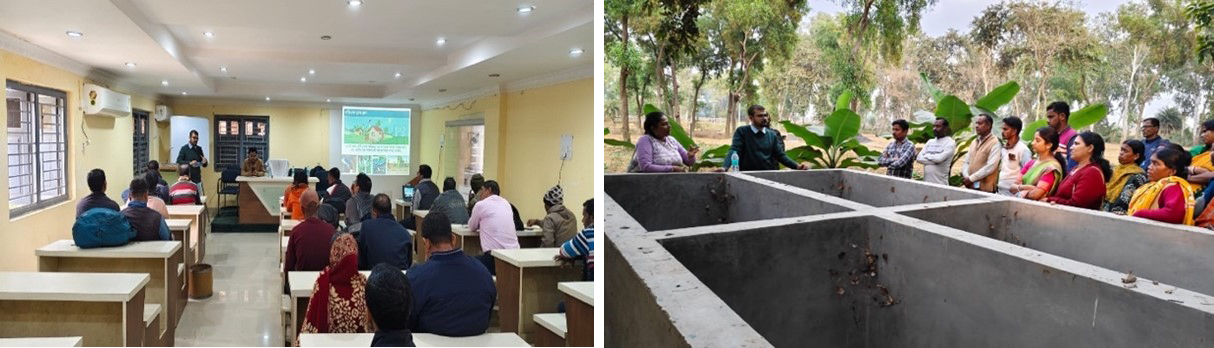
Under the Rural Sanitation Cell, Water For People India supported GPs and block engineers in Ganga-bordering blocks to conduct drain surveys, resulting in the mapping of 1,086 drains and identification of suitable technologies. The consolidated report has been submitted to the Ministry of Jal Shakti. In parallel, block-level functionality trainings on Solid Waste Management and Plastic Waste Management were conducted in Birbhum and Jhargram through convergence with the Panchayats & Rural Development Department and District Sanitation Cells. The hands-on, field-based trainings focused on waste segregation, composting, plastic management, and worker safety, strengthening the capacities of SHGs, sanitation workers, and GP teams to move from infrastructure creation to sustained service delivery.
WRM Interventions Gain Momentum in Birbhum and South 24 Parganas
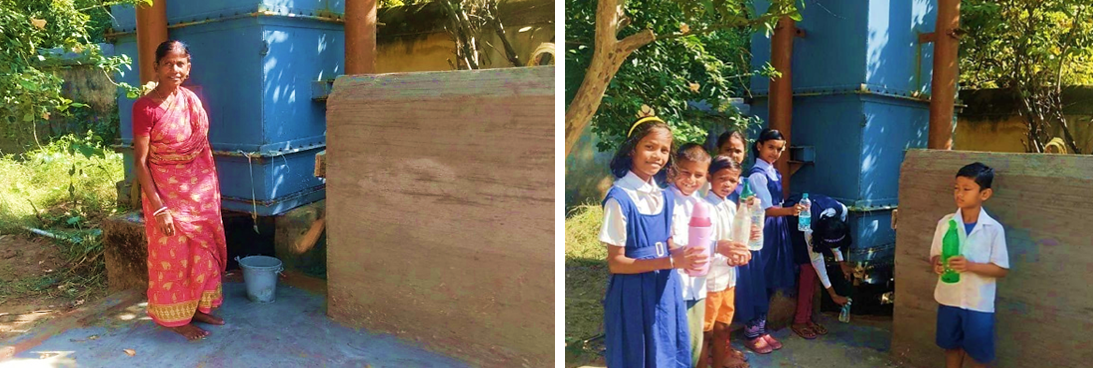
With support from Caterpillar, Water For People India continued to advance water security and climate resilience in Birbhum and South 24 Parganas. Ongoing interventions include fluoride mitigation infrastructure, groundwater recharge through percolation tanks, and construction of handwashing and drinking water stations. Farmer trainings on climate-adaptive agriculture are also underway, strengthening resilient livelihoods. Together, these efforts are improving water quality, availability, and community resilience.
Community-Led WRM Innovations Take Shape in South 24 Parganas
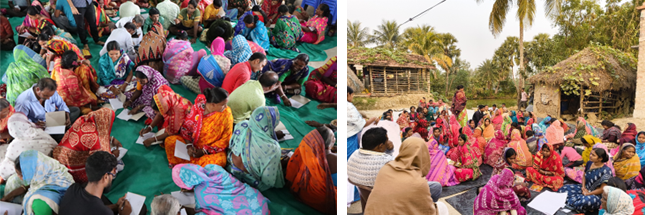
With support from Oak Foundation, Water For People India is actively working towards executing water resource management interventions in South 24 Parganas through model ponds, de-siltation, and ridge-and-furrow systems, benefiting women SHGs and farmers. Communities are also adopting saline fishery, saline-tolerant crops, and water-efficient vegetable farming. The upcoming installation of community water filters in Gosaba and Patharpratima is expected to significantly improve access to safe drinking water.
Advancing the Pit Life Extender Model in Duttabad, Kolkata
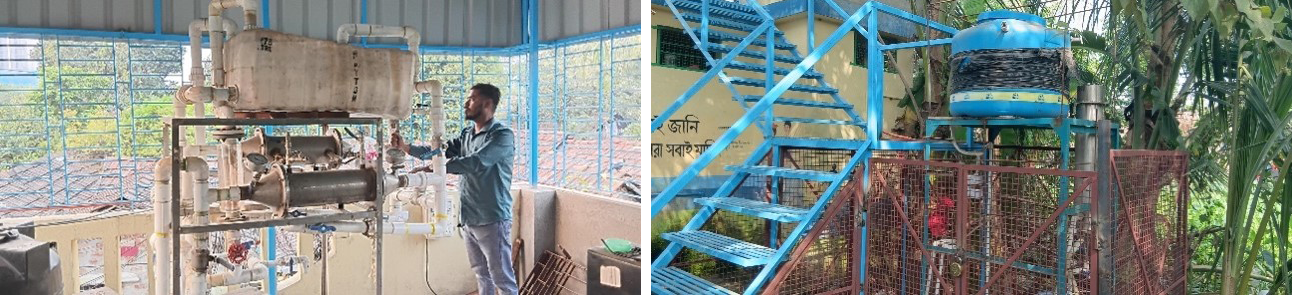
During the quarter, progress was made at the Duttabad Community Toilet site to optimize process parameters of a ceramic membrane–based prototype under field conditions as part of the Pit Life Extender (PLE) model. A temporary shed was constructed and the unit installed to treat septic tank supernatant for sustainable wastewater reuse. A 3–4 month trial will fine-tune treatment performance, followed by a live demonstration of safe blackwater reuse for an additional 1–2 months for toilet flushing and other non-potable uses, supporting future replication and scale-up of decentralized sanitation solutions.
Organizational Updates:
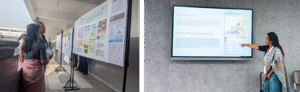
Water For People India Recognized at International Water Summit 2025 – Water For People India participated in the International Conference on Water Summit 2025 held on November 20–21at Manav Rachna Centre for Advanced Water Technology and Management, to discuss the theme “Sustainable Groundwater Management for Societal Uses and Ecosystem Services”. Our team showcased community-led Integrated Water Resources Management (IWRM) initiatives from Birbhum and the Sundarbans through oral and poster presentations. Among 17 posters, Water For People India’s entry received the Best Poster Prize, highlighting the innovation and impact of our field work. The conference provided a valuable platform to share learning and engage with global experts on groundwater sustainability.
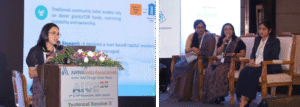 Water For People India at AICE 2025 – Women in Water Session – Water For People India participated in the 4th Annual International Conference and Exhibition (AICE 2025), organized by the American Water Works Association India in Indore from December 8-10, 2025. Representing the organization, a presentation was made during the Women in Water session on a financially viable, community-managed shared sanitation model from Duttabad slum, Kolkata. The conference brought together global experts, practitioners, and government officials to exchange insights on water sustainability and applied solutions. Participation in the session highlighted Water For People India’s work on inclusive and sustainable sanitation, alongside inspiring women leaders from across the water sector.
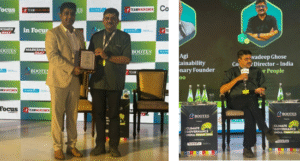 Water For People at Climate Governance India Summit 2025 – Water For People India participated in the Climate Governance India Summit 2025 in New Delhi. Country Director Bishwadeep Ghose joined as a panelist in the trilogue on strengthening the water–waste–agriculture nexus for climate resilience and sustainable livelihoods. The discussion emphasized the need for cross-sector collaboration to conserve resources, mitigate climate risks, and empower communities. Water For People reaffirmed its commitment to building climate-resilient ecosystems where safe water and sanitation form the foundation of sustainable development.
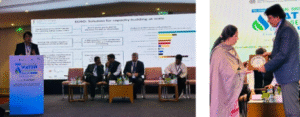 Water For People India at the National Sustainable Water Management Conclave – Water For People India participated in the 11th Annual National Sustainable Water Management Conclave held in New Delhi, organized by APAC Media with support from the Ministry of Jal Shakti and the National Water Mission. The conclave brought together government, civil society, and academic stakeholders to discuss the role of data, artificial intelligence, and digital platforms in strengthening water governance. Vivek Sharan, State Lead – Bihar, shared Water For People India’s experiences with platforms such as iECHO, mGramSeva, AVNI, and Gram Vaani, highlighting how digital tools can enhance capacity building, tariff collection, and community engagement for sustainable water management.
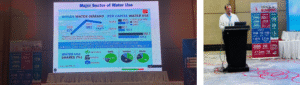 Water For People India Shares WRM Experience at National Groundwater Interaction Program – The Ministry of Jal Shakti, through the Central Ground Water Board (CGWB), organized a Public Interaction Program on groundwater and spring-shed management at Pantnagar, Uttarakhand, in collaboration with CHIRAG, Nainital. The discussions focused on sustainable water resource management in hilly regions, with stakeholders sharing research and field experiences. Water For People India presented its water resource management and conservation initiatives from Maharashtra and West Bengal. The programme concluded with a strong emphasis on collaboration among institutions, industries, and communities to strengthen groundwater sustainability and water resilience.
Add a Call to Action:
follow us on 

 and
and  to stay posted
Email us at india@waterforpeople.org if you’d like some details or clarifications on any part of the newsletter. You can also write to us to explore ways to partner or collaborate with us.